For the past few decades, many of us have spent most of our time in conference rooms with supply chain leaders. The conversations sound the same. A tariff shifts. A factory in Vietnam slows down. A hero product takes off in one region and stalls in another. The question is always the same:
What should we do, and how fast can we know?
Today, the answer takes too long. Building a meaningful scenario takes weeks. The result lands on a slide deck. By then the question has moved on.
That’s why we built Supply Chain Canvas™.
Why Supply Chain Canvas™?
Modern planning systems were designed for a steadier world — monthly cycles, a small group of trained planners, predictable lead times. Persistent volatility breaks all three assumptions. We saw planners stretched thin in spreadsheets, finance teams waiting on analyst queues, and executives making consequential calls with partial information.
Canvas was built for a different rhythm. Two layers, working together.
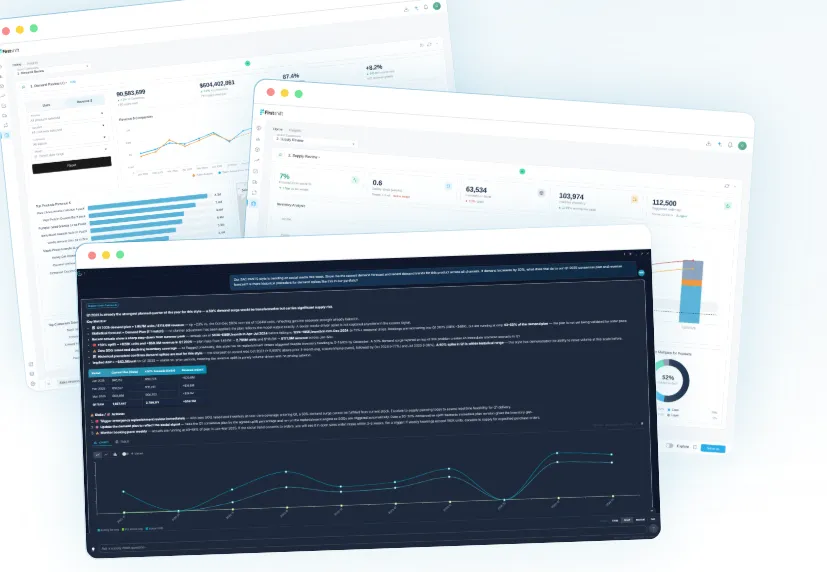
A conversational layer where anyone on the team — a COO, a planner, a merchant, a finance partner — can ask a supply chain question in plain English and get a grounded answer in seconds. No SQL. No analyst hand-off.
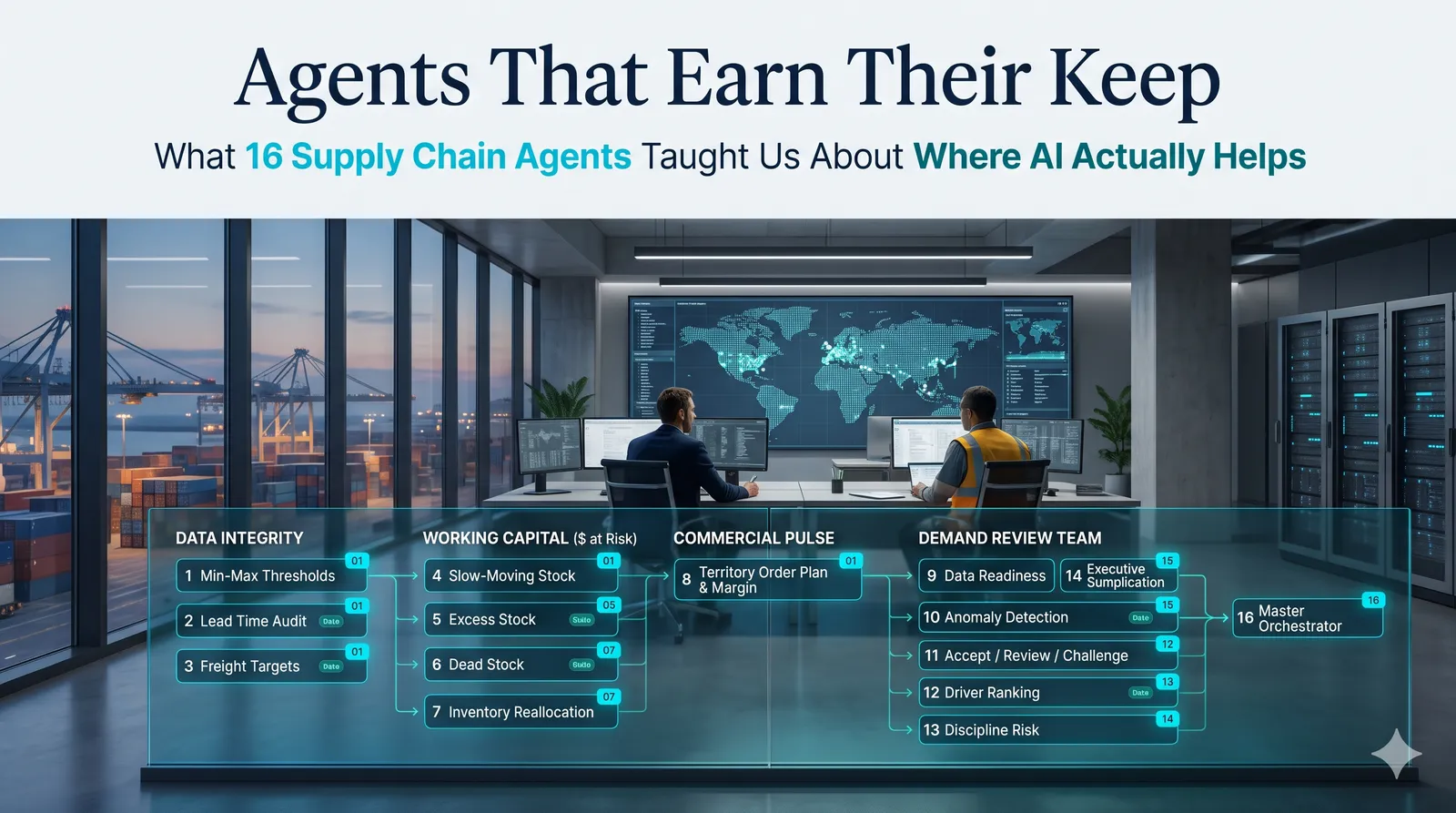
An agentic layer where always-on AI agents detect, analyze and act on demand shifts and supply disruptions. They flag what’s changed, propose moves, and — with your approvals — write actions back into your planning or execution system.
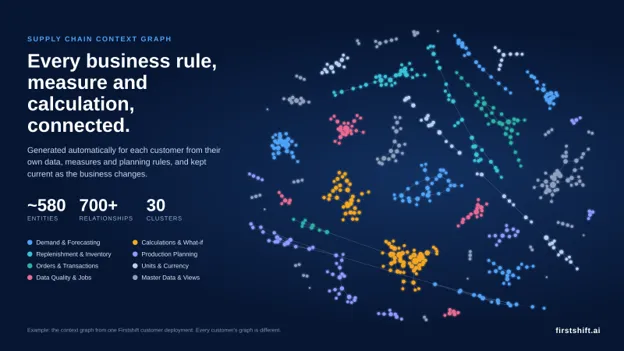
Both layers share one semantic model of your business. The answers reflect your supply chain network, your products, your regions, your constraints — not a generic textbook.
Related reading: Build vs. Buy AI for Supply Chain Planning
What Supply Chain Canvas™ Changes?
Three things, mostly.
Speed. Scenario answers in minutes instead of weeks. A tariff stress test, a production ramp decision, an inventory rebalance — all in the same meeting.
Audience. Decision-making widens beyond the planning team. Sales and marketing leaders, brand owners, and regional GMs can ask their own questions and act on the answers.
Risk. Canvas sits on top of the planning, ERP, and PLM systems you already trust. Read-only at first. Write-back only with your approvals. No re-platforming bet required.
Why Now?
The technology has finally caught up to the problem. Large language models, paired with a purpose-built supply chain semantic model and in-memory simulation, can now support production decisions — not just demos. At the same time, supply chains have been operating through persistent volatility for several years. Waiting another year to act on it is in itself a decision.
What’s Next?
Supply Chain Canvas™ is currently being deployed at customers across consumer goods, food, agriculture, and apparel. Over the next few weeks we’ll publish working examples — tariff stress tests, hero-product chase decisions, capacity simulations — drawn from real deployments.
If you’d like to see Supply Chain Canvas™ on a category you care about, we’d welcome a working session. Bring one product line and a few priority questions. We’ll bring Supply Chain Canvas™.
We built Supply Chain Canvas™ because supply chain leaders deserve answers as fast as the world changes around them.
Schedule time to see it live today!
Ready to see Firstshift in action?
Request a personalised demo and see how Firstshift can transform your supply chain planning.